We ship Canada-wideTracked delivery to every province and territory, in plain packaging. Orders ship within 24 hours of payment.All delivery areasShipping policy
Are Native Cigarettes Legal in Canada? A Province-by-Province Guide (2026)
Updated:
For Canadian adults of legal smoking age
This article provides general information for Canadian adults.
Product availability, pricing, delivery estimates and provincial
requirements may change.
Are native cigarettes legal in Canada? There is no single yes-or-no answer that applies to every product, seller, customer, province, and delivery method.
A lawful cigarette transaction can depend on the buyer’s age, the seller’s authority to sell tobacco, federal excise licensing and stamps, provincial tobacco tax and markings, product packaging and additive rules, the location of sale, the delivery destination, and whether a narrow First Nations tax exemption applies.
Two provinces and territories require especially careful treatment for online orders: Quebec generally requires the retailer and purchaser to be physically present in a fixed tobacco retail outlet, while Nunavut prohibits internet sales and home delivery of tobacco. In other jurisdictions, online availability still does not remove licensing, tax, product-compliance, and age-verification requirements.
This 2026 province-by-province guide provides general consumer information, not legal or tax advice.
Quick answer
Some native cigarette products can be lawfully manufactured, sold, purchased, and possessed in Canada when all applicable federal, provincial, territorial, tax, licensing, stamping, product, and age rules are satisfied. The words “native cigarette,” “reserve smoke,” or “for personal use” do not create a blanket legal exemption.
The Legal Framework for Native Cigarettes in Canada
Native cigarettes are not governed by one special “native cigarette law.” Several legal systems overlap:
Federal tobacco-product law regulates manufacture, access, promotion, additives, appearance, packaging, and labelling.
Federal excise law governs tobacco manufacturing licences, excise duty, stamping, possession, and the duty-paid market.
Provincial and territorial tobacco laws regulate retail sales, minimum ages, licensing, display, flavours, delivery, possession, and enforcement.
Provincial tobacco-tax laws govern tax, markings, exemptions, permits, and quantities.
Section 87 of the Indian Act can provide tax relief in defined circumstances involving qualifying property of registered First Nations individuals or bands situated on a reserve.
First Nations tax laws may impose a First Nations Tax or First Nations Goods and Services Tax on some reserves.
Indigenous ownership or a reserve location can be relevant, but neither one automatically removes federal product rules, federal excise rules, provincial retail restrictions, or requirements at the customer’s delivery destination.
Five Separate Questions Determine Whether a Transaction Is Lawful
1. Is the Product Lawful?
A product may need to comply with federal rules involving:
Manufacturing and excise licensing
Federal excise duty and stamping
Ingredients and prohibited additives
Health warnings
Plain and standardized appearance
Promotion and prohibited descriptive terms
Package quantity
2. Is the Seller Authorized?
Depending on the jurisdiction and business model, a tobacco seller may require:
A federal tobacco licence if manufacturing
A provincial tobacco retail authorization or licence
A wholesaler, collector, or distributor permit
Authorization to sell marked, unmarked, black-stock, allocation, or exempt tobacco
Registration to collect provincial tobacco tax
3. Is the Buyer Eligible?
The customer must meet the applicable legal age. A registered First Nations customer claiming a tax exemption may also need to prove registration and satisfy the location and delivery conditions of that exemption.
4. Is the Sale Method Permitted?
Internet and delivery rules differ. Quebec generally requires a physical retail transaction. Nunavut prohibits internet tobacco sales and home delivery. Other provinces may allow distance transactions only when the seller meets all applicable tax, licensing, age, product, and delivery requirements.
5. Is the Destination Permitted?
A product that can be sold in one province is not automatically lawful to deliver into another. The destination province’s tax, marking, flavour, age, retail, and possession rules can apply.
Legal age is only one part of the analysis
Being 18, 19, or 21 does not make every cigarette product or online transaction legal. The product, seller, tax status, markings, sales method, and destination must also comply.
What Section 87 of the Indian Act Actually Means
Section 87 exempts qualifying personal property of a registered First Nations individual or Indian band when the property is situated on a reserve. The Canada Revenue Agency requires proof of registration when the exemption is claimed.
Section 87 Can Be Relevant When:
The purchaser is entitled to the exemption.
The property is purchased on a reserve or delivered by the vendor to a reserve under the applicable rules.
The transaction satisfies the federal or provincial tax policy being relied upon.
Section 87 Does Not Automatically Mean:
Every Indigenous-owned company is exempt from every tax.
Every product made on reserve is duty-free.
Every non-status customer can buy tax-exempt cigarettes.
Every online order delivered off reserve qualifies.
Provincial tobacco laws do not apply.
Federal manufacturing, additive, packaging, and labelling laws do not apply.
The CRA also explains that corporations do not generally receive the personal Section 87 exemption merely because they are owned by registered First Nations individuals.
Some First Nations impose their own tax on tobacco and other listed goods. Section 87 does not prevent a First Nation government from imposing a First Nations Tax on its reserve.
Federal Excise Stamps, Duty-Paid Cigarettes, and Untaxed Tobacco
The Canada Revenue Agency states that an excise stamp is generally required on tobacco products sold to consumers in Canada. The stamp indicates that federal excise duty has been paid when required.
A cigarette stamp normally includes:
“DUTY PAID CANADA DROIT ACQUITTÉ”
The product type
The package quantity
Security features
Province-specific colouring or wording where an adapted stamp is used
What the Absence of a Stamp Means
Federal excise guidance says the absence of a required stamp is notice that duty has not been paid. Unstamped tobacco can exist in narrow authorized channels, but the absence of a stamp is not proof that the product is lawful for the general public.
Provincial Markings
Provinces can require adapted federal stamps, province-specific markings, or “black stock” identification for limited exempt-sale systems. Requirements differ by province.
Low Price Is Not a Legal Test
A low carton price does not prove that a cigarette is contraband. It also does not prove that the product is legally exempt. Customers should not use price, packaging colour, or the word “native” as a substitute for checking the product and seller.
Can You Legally Buy Native Cigarettes Online in Canada?
Not under one nationwide rule. Canada does not provide a universal legal clearance for every adult to order every native cigarette product online to every province or territory.
Quebec
Section 14.1 of Quebec’s Tobacco Control Act states that tobacco may not be sold retail except in a fixed tobacco retail outlet with the operator or employee and purchaser physically present. That generally prevents ordinary internet or mail-order retail cigarette sales to Quebec customers.
Nunavut
Nunavut’s official tobacco guidance prohibits selling tobacco through the internet and prohibits home delivery of tobacco and alternative nicotine products.
Other Provinces and Territories
In other jurisdictions, the absence of an explicit internet-sales ban does not mean any website may ship any cigarette. A seller may still need to satisfy:
Federal excise and product rules
Provincial retail or tax registration
Tax collection and remittance
Provincial marking rules
Age verification
Delivery or pickup restrictions
Flavour and additive restrictions
Possession rules at the destination
A domestic parcel does not pass through international customs, but it can still be subject to federal and provincial tax, carrier, inspection, seizure, and enforcement rules.
Province-by-Province Native Cigarette Legal Guide
This table summarizes legal ages and major online-order considerations as of July 2026. It does not confirm that a particular retailer or product is authorized in the destination.
Province or Territory
Minimum Tobacco Age
Online or Delivery Note
Key Consumer Issue
Alberta
18
No blanket online-cigarette authorization; all tax, product, and age rules still apply.
Alberta tobacco tax and retailer obligations.
British Columbia
19
Retail sellers need authorization; selling tax-exempt tobacco to an ineligible customer is illegal.
Tobacco Retail Authorization, tax, stamps, and exempt-sale eligibility.
Manitoba
18
Retail and wholesale tobacco licensing applies.
Licensed seller, tax-paid product, and age compliance.
New Brunswick
19
Seller licensing and provincial tobacco tax apply.
Age, licence, tax, and package compliance.
Newfoundland and Labrador
19
Tobacco sellers require provincial licensing.
Seller licence, product tax, age, and markings.
Northwest Territories
19
Age and territorial tobacco-tax rules apply.
Tax, lawful seller, age verification, and product compliance.
Nova Scotia
19
Retail access, flavour, display, tax, and age rules apply.
Seller compliance and flavoured-tobacco restrictions.
Nunavut
19
Internet sales and home delivery of tobacco are prohibited.
Do not order tobacco for home delivery.
Ontario
19
Allocation cigarettes are tax-exempt only for eligible First Nations individuals purchasing on reserve for exclusive use.
Marked tobacco, seller permits, tax, and allocation eligibility.
Prince Edward Island
21
Strict age verification and provincial retailer requirements apply.
Highest provincial minimum age in Canada.
Quebec
18
Retail tobacco sales generally require the seller and buyer to be physically present in a fixed retail outlet.
Ordinary internet cigarette sales are generally prohibited.
Saskatchewan
19
Age increased from 18 to 19 on February 1, 2024.
Seller, tax, product, and age compliance.
Yukon
19
Territorial tobacco, flavour, age, and tax rules apply.
Flavoured-tobacco prohibition and lawful sale requirements.
Detailed Provincial and Territorial Notes
Ontario
Ontario prohibits selling or supplying tobacco to anyone under 19. Retail dealers must follow provincial tobacco-tax, permit, marking, and recordkeeping rules.
Ontario’s First Nations Cigarette Allocation System allows eligible First Nations individuals to buy allocation cigarettes on reserve for their exclusive use without Ontario tobacco tax. It is not a general tax exemption for non-status customers or off-reserve delivery.
Ontario also states that, unless otherwise authorized, buying, possessing, selling, or distributing untaxed cigarettes is illegal.
British Columbia’s minimum age is 19. Tobacco retailers generally require a valid Tobacco Retail Authorization. Provincial guidance identifies selling taxable tobacco without collecting tobacco tax and selling tax-exempt tobacco to an ineligible customer as illegal activities.
BC’s exempt-sale system has specific dealer permits, eligible consumers, product markings, and quantity restrictions. It is not an open exemption for all reserve-store or online customers.
BC also restricts buccal nicotine pouches to pharmacist sale. Native Nicotine should not ship nicotine pouches to BC addresses.
Alberta’s minimum age is 18. The Tobacco, Smoking and Vaping Reduction Act regulates age, possession, use, promotion, and retail conduct. Provincial tobacco tax applies unless a specific exemption is available.
Alberta retailers are generally not required to obtain a provincial tobacco retail licence unless they operate on reserve, operate a duty-free shop, or fall into another listed registration category. That does not remove federal excise, tax, product, and age requirements.
Quebec’s minimum tobacco age is 18. More importantly for e-commerce, section 14.1 of the Tobacco Control Act requires retail tobacco sales to occur in a fixed tobacco retail outlet with the operator or employee and the purchaser physically present.
That means an ordinary online checkout followed by courier or mail delivery does not fit Quebec’s general retail-sale rule. A retailer should obtain Quebec-specific legal advice before accepting any cigarette order for delivery into the province.
Native Nicotine’s Quebec and Montreal pages should be treated as informational location pages unless and until the business has confirmed a compliant sales model with Quebec counsel.
Manitoba
Manitoba’s minimum age is 18. The province requires tobacco retail and wholesale licensing under its tobacco-tax legislation, and tobacco cannot be supplied to a child.
Saskatchewan’s minimum tobacco age is 19. It increased from 18 on February 1, 2024. Provincial tobacco and vapour legislation regulates access, retail conduct, and use.
Nova Scotia’s minimum age is 19. The province restricts sales to minors, retail display and promotion, and most flavoured tobacco. Seller and product compliance must be assessed before delivery.
New Brunswick’s minimum age is 19. Retailers must comply with provincial tobacco licensing and tobacco-tax requirements. Tobacco, smoking supplies, and electronic cigarettes cannot be sold to a person under 19.
Newfoundland and Labrador’s minimum age is 19. Tobacco vendors require a provincial licence, and the province restricts sales and supply to people under 19.
Prince Edward Island’s minimum age is 21. Retailers must verify that customers meet the provincial age requirement. A customer who meets the federal minimum of 18 but is under 21 cannot lawfully purchase tobacco in PEI.
Yukon’s minimum age is 19. Territorial law regulates sales, promotion, public use, and flavoured tobacco. Yukon prohibits the sale, supply, or distribution of flavoured tobacco products.
The Northwest Territories’ minimum tobacco age is 19. Territorial tobacco-control and tobacco-tax laws apply to sales, possession, and retail activity.
Nunavut’s minimum tobacco age is 19. Nunavut’s official guidance prohibits:
Selling tobacco through the internet
Home delivery of tobacco and alternative nicotine products
Selling single cigarettes
Selling or supplying tobacco to anyone under 19
Native Nicotine should not accept cigarette orders for home delivery to Nunavut unless the law changes or the business obtains authoritative legal advice identifying a compliant exception.
Do not assume that native branding creates an exemption from federal flavour rules.
The federal government prohibits menthol as an additive in cigarettes, blunt wraps, and most cigars sold on the Canadian market. Federal law also prohibits other specified flavouring additives in cigarettes.
Provinces and territories can add broader flavour bans. Yukon and Nova Scotia, for example, have provincial restrictions affecting flavoured tobacco.
A product appearing in an online catalogue does not prove that it is lawful to sell or deliver in every province.
Do Native Cigarettes Have to Follow Canadian Packaging Rules?
Health Canada’s appearance, packaging, and labelling rules apply to tobacco products and packages intended for retail sale in Canada. Requirements include:
Health warnings
Health-information messages
Toxicity information
Plain and standardized appearance
Warnings directly on individual cigarettes
Restrictions on promotional terms and branding elements
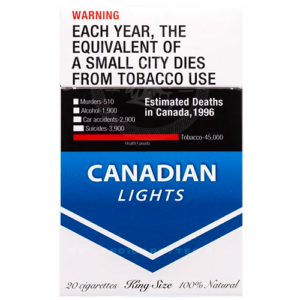
Federal regulations also prohibit promotional terms such as “light” and “mild” and variations of those terms on specified tobacco products, packaging, promotions, and retail displays.
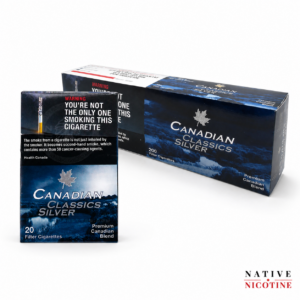
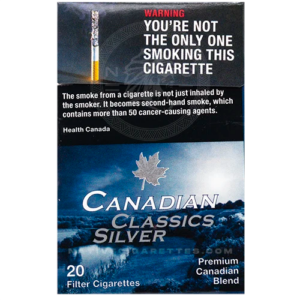
A branded native cigarette pack is not automatically exempt. Packaging appearance alone cannot establish whether the product complies.
Personal use is relevant because commercial resale creates additional licensing and tax obligations. It does not override other laws.
Personal Use Does Not Automatically Legalize:
Possession of unstamped tobacco where a stamp is required
Possession of provincial unmarked tobacco by an ineligible consumer
An internet sale prohibited by the destination province or territory
Delivery of a prohibited flavoured product
Supplying a person below the legal age
Failure to pay a tax that applies to the transaction
Resale Is a Separate Legal Activity
Buying cartons and reselling packs can trigger federal, provincial, and municipal licensing, tax, recordkeeping, packaging, and retail obligations. A personal retail purchase does not authorize commercial resale.
Age Verification for Online Orders and Delivery
The federal Tobacco and Vaping Products Act prohibits furnishing tobacco to anyone under 18. Provincial and territorial minimum ages of 19 or 21 apply where they are stricter.
A responsible remote-sales process may include:
Date-of-birth confirmation
Government-issued photo identification
Third-party age verification
Adult-signature service
Proof of age at delivery or pickup
No safe drop where an adult must receive the parcel
Entering an age checkbox by itself may not satisfy every provincial or carrier requirement.
Current Legal Ages
18: Alberta, Manitoba, Quebec
19: British Columbia, New Brunswick, Newfoundland and Labrador, Northwest Territories, Nova Scotia, Nunavut, Ontario, Saskatchewan, Yukon
21: Prince Edward Island
Available Product Categories Do Not Prove Province-Wide Legality
The live Native Nicotine catalogue can help adult customers compare brands, profiles, quantities, and prices. A product appearing below should not be interpreted as confirmation that it can be lawfully delivered to every province or territory.
Before checkout, compare the product with the law of the delivery destination. Quebec and Nunavut require special attention because their laws restrict the online or delivery sales model itself.
Legal and Compliance Checklist Before Ordering
☐ I meet the minimum tobacco age in my province or territory.
☐ I am not ordering tobacco for delivery to Nunavut.
☐ I understand that ordinary online tobacco retail sales are generally prohibited in Quebec.
☐ I reviewed the manufacturer and actual product packaging.
☐ I checked for the applicable federal excise stamp and provincial markings.
☐ I did not assume that “native” means tax-free for me.
☐ I did not assume that personal use overrides tax or possession laws.
☐ I checked federal and provincial flavour restrictions.
☐ I will not supply the product to a minor.
☐ I will not resell the product without the required licences and registrations.
☐ I can provide valid government-issued identification if required.
☐ I understand that domestic shipping is still subject to Canadian enforcement and carrier rules.
Frequently Asked Questions About Native Cigarette Legality
Are native cigarettes legal in Canada?
Some native cigarette products and transactions can be lawful when the product, manufacturer, seller, buyer, tax treatment, excise stamps, provincial markings, packaging, age verification, sale method, and destination comply with the applicable law. The category name does not create a blanket exemption.
Can any adult buy native cigarettes online?
No universal rule says every adult may order every native cigarette online. Quebec generally requires a physical retail transaction, Nunavut prohibits internet tobacco sales and home delivery, and every other jurisdiction still applies tax, product, seller, age, and delivery rules.
Are native cigarettes tax-free for non-status customers?
Not automatically. Section 87 tax relief applies in defined circumstances involving eligible registered First Nations individuals or bands and qualifying property situated on a reserve. Non-status customers should not assume the same exemption applies.
Does Section 87 exempt Indigenous-owned tobacco companies from every tax?
No. Section 87 generally concerns qualifying property of registered First Nations individuals or bands situated on a reserve. A corporation does not automatically receive the personal exemption because it is Indigenous-owned.
Do cigarettes sold to Canadian consumers need an excise stamp?
The CRA says an excise stamp is generally required on tobacco products sold to consumers in Canada. Narrow authorized exceptions can exist, but an unstamped product is not automatically lawful for the general public.
Can native cigarettes be shipped to Quebec?
Quebec’s Tobacco Control Act generally requires the tobacco retailer or employee and purchaser to be physically present in a fixed retail outlet. A standard online checkout and courier-delivery model does not fit that general rule.
Can native cigarettes be shipped to Nunavut?
Nunavut’s official guidance prohibits internet tobacco sales and home delivery of tobacco. A retailer should not accept ordinary home-delivery cigarette orders to Nunavut.
Are menthol native cigarettes exempt from the federal ban?
Do not assume so. Federal law prohibits menthol as an additive in cigarettes sold on the Canadian market. Indigenous ownership, reserve manufacture, or native branding does not automatically create an exemption.
Does buying for personal use make unstamped cigarettes legal?
No. Personal-use intent does not override excise-stamp, provincial marking, tax, possession, flavour, online-sale, or age laws.
Can I resell native cigarettes?
Not based on an ordinary consumer purchase. Tobacco resale can require federal, provincial, territorial, and municipal licences, registrations, tax collection, recordkeeping, and compliant products.
What is the legal age to buy cigarettes in Canada?
The age is 18 in Alberta, Manitoba, and Quebec; 21 in Prince Edward Island; and 19 in the remaining provinces and territories. Federal law creates a minimum protection of 18, but stricter provincial or territorial ages apply.
Do domestic cigarette parcels go through customs?
Domestic Canadian parcels do not go through international customs, but they remain subject to Canadian federal and provincial tax, carrier, inspection, seizure, age-verification, and enforcement rules.
The Bottom Line
Native cigarettes are not automatically legal, illegal, tax-free, or contraband as one entire category. The correct legal answer is product-specific and transaction-specific.
A compliant sale requires more than an adult customer and a Canadian delivery address. The product, seller, excise stamp, provincial markings, tax, package, ingredients, sale method, age verification, and destination all matter.
For Native Nicotine, the most urgent compliance distinctions are that ordinary online cigarette sales to Quebec are generally inconsistent with Quebec’s physical-presence rule and Nunavut expressly prohibits internet tobacco sales and home delivery. Those destinations should be blocked or reviewed by qualified counsel before orders are accepted.
Review before ordering
Check the product, quantity, destination, and applicable rules.
Use official federal and provincial sources for legal questions. Product availability on a website is not proof that delivery is authorized in every province or territory.