We ship Canada-wideTracked delivery to every province and territory, in plain packaging. Orders ship within 24 hours of payment.All delivery areasShipping policy
Native Cigarettes vs Regular Cigarettes: What’s Actually Different? (2026)
Updated:
For Canadian adults of legal smoking age
This article provides general information for Canadian adults.
Product availability, pricing, delivery estimates and provincial
requirements may change.
Native cigarettes vs regular cigarettes: both are combustible tobacco products that contain nicotine, but they are not automatically the same in taste, construction, package size, manufacturing source, tax status, retail channel, price, or regulatory markings.
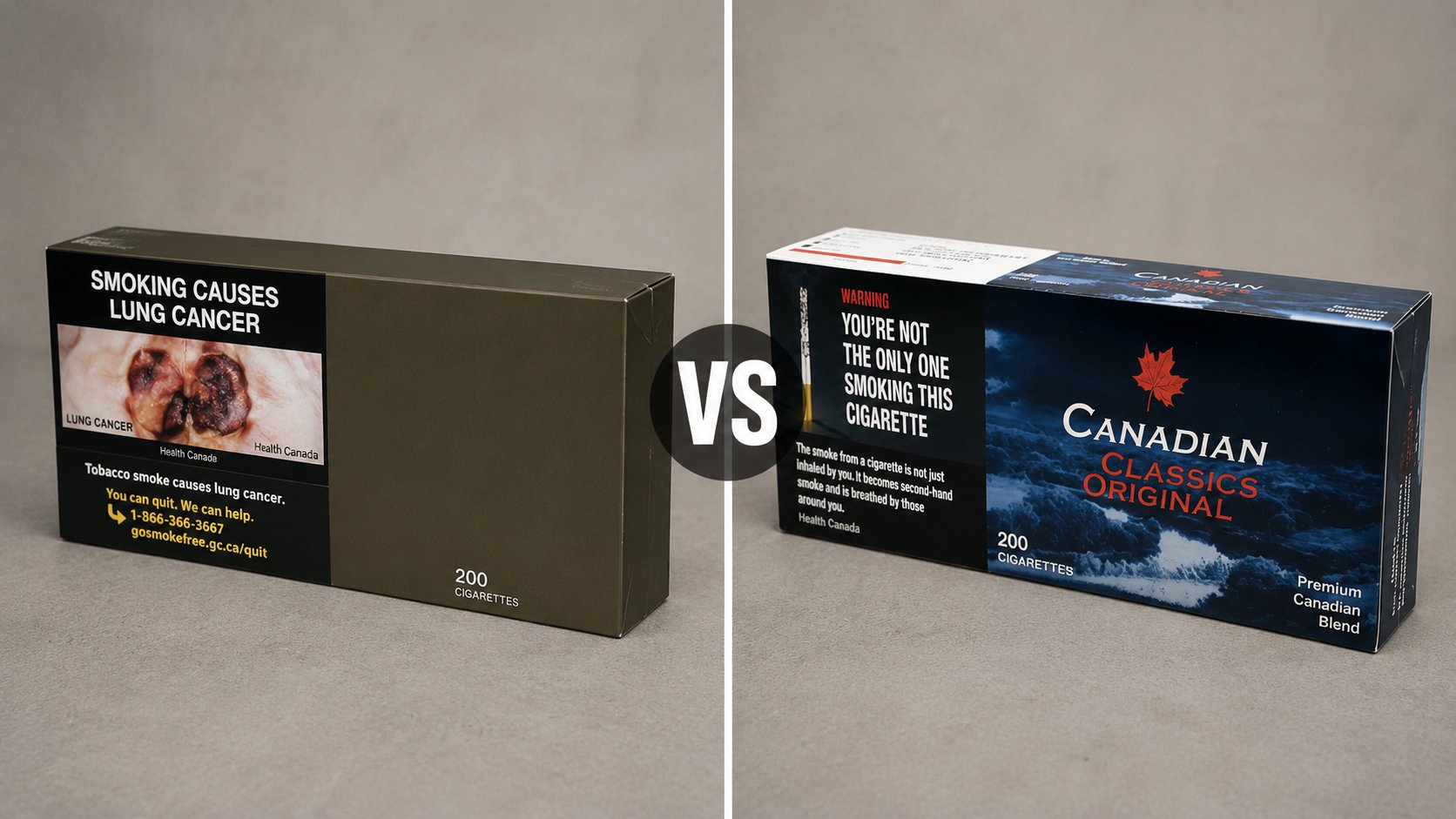
Mainstream cigarettes are generally sold through conventional Canadian retail networks with federal excise duty, provincial tobacco tax, applicable sales tax, standardized packaging, and retail margins built into the final price. Products commonly described as native cigarettes are associated with Indigenous or First Nations tobacco markets, but the term itself does not prove where a specific product was made, whether it is duty-paid, whether it is authorized for a particular buyer, or whether it is equivalent to a named mainstream brand.
This detailed comparison explains what can genuinely differ, what remains the same, how to compare packs and cartons accurately, and which claims adult customers should treat cautiously.
Quick answer
The biggest differences are usually price, tax and distribution structure, brand selection, product format, taste profile, purchasing method, package markings, and availability. The biggest similarity is health risk: all cigarettes involve nicotine addiction and exposure to toxic tobacco smoke.
Native Cigarettes vs Regular Cigarettes at a Glance
Often marketed through Indigenous or First Nations tobacco channels. Verify the manufacturer for each product.
Usually produced or distributed by large national or multinational tobacco companies.
Typical selling channel
On-reserve stores, Indigenous-market sellers, and some online retailers.
Convenience stores, gas stations, licensed tobacco retailers, and other conventional outlets.
Price
Often materially lower, especially at multi-carton tiers.
Usually higher because duty, provincial tobacco tax, sales tax, and retail overhead are reflected in the price.
Tax status
Transaction-specific. The term “native” does not automatically mean tax-exempt for every buyer.
Ordinary retail products are generally duty-paid and provincially taxed.
Pack size
Commonly 20 cigarettes for standard packs, but specialty products may contain 10 or another quantity.
Commonly 20 or 25 cigarettes, depending on the brand and province.
Carton size
Often 10 packs, but the total can be 100, 200, or another quantity depending on pack size.
Often 8 or 10 packs depending on the package format, producing totals such as 200 cigarettes.
Taste
Varies by brand, blend, paper, filter, moisture, and storage.
Varies by brand, blend, paper, filter, moisture, and storage.
Strength labels
May use terms such as full flavour, light, silver, menthol, or slim.
Often uses brand-specific variants within federal packaging and promotion restrictions.
Packaging
Packaging varies. Branded appearance alone does not prove legal or regulatory status.
Products intended for retail sale in Canada are subject to federal plain and standardized appearance and labelling rules.
Purchase timing
Online orders require payment confirmation, processing, shipping, and delivery.
Usually available immediately at a local retail store.
Health risk
Serious health risks from nicotine and tobacco smoke.
Serious health risks from nicotine and tobacco smoke.
The comparison cannot be reduced to “the same cigarette without tax.” Individual products can differ in tobacco blend, filter ventilation, paper, size, moisture, manufacturing controls, packaging, and consistency.
What Is Fundamentally the Same?
Native cigarettes and regular cigarettes belong to the same broad product category: combustible tobacco cigarettes. When lit, both burn tobacco and create smoke containing nicotine and numerous toxic chemicals.
Health Canada states that tobacco smoke contains more than 7,000 chemicals, including approximately 80 chemicals known to cause cancer. Lower price, Indigenous origin, package colour, “natural” language, or light-style branding does not remove those risks.
Shared Characteristics
Both contain tobacco unless a particular listing explicitly states otherwise.
Both generally contain nicotine and can produce dependence.
Both create smoke through combustion.
Both can be sold in filtered, king-size, slim, or other formats.
Both can have stronger, smoother, menthol-style, or brand-specific profiles.
Both are restricted to adults who meet the legal age applicable in their province or territory.
Neither category is safe to smoke.
Most important similarity
Native and regular cigarettes are both combustible tobacco products. A cheaper price or smoother taste does not mean lower health risk.
Difference 1: Manufacturing, Brand Origin, and Distribution
Regular Retail Cigarettes
Mainstream Canadian cigarette brands are commonly produced or distributed by large tobacco companies operating within established national supply chains. Products move through manufacturing, warehousing, distribution, and licensed retail channels before reaching customers.
The conventional chain may include:
Manufacturer or importer
National or regional distribution
Wholesale or retail logistics
Convenience store, gas station, or tobacco retailer
Customer
Native Cigarettes
“Native cigarette” is a broad commercial term, not a single manufacturing standard. Many products are marketed as associated with Indigenous-owned businesses, First Nations manufacturers, or on-reserve tobacco economies. The term does not guarantee that every product:
Was manufactured on a reserve
Was manufactured in Canada
Was made by an Indigenous-owned company
Uses Canadian-grown tobacco
Has a particular excise or provincial tax status
Meets the same specifications as another native brand
The correct approach is to examine the specific manufacturer and product rather than treating every native cigarette as interchangeable.
Why a Shorter Chain Can Reduce Price
An online seller may purchase more directly and operate without a national convenience-store network. Fewer distributors, storefronts, franchise expenses, and shelf markups can reduce the final price even before tax differences are considered.
Supply-chain comparison
Regular retail: manufacturer → distributor → retailer → customer Direct online: manufacturer or supplier → online retailer → customer
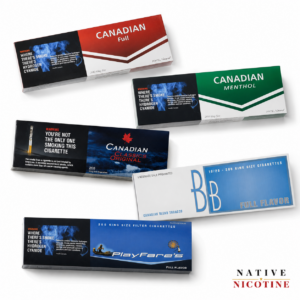
Popular Native Cigarettes With Real Product Images
The product grid below pulls live photographs, current variations, availability, ratings, and pricing directly from the Native Nicotine catalogue.
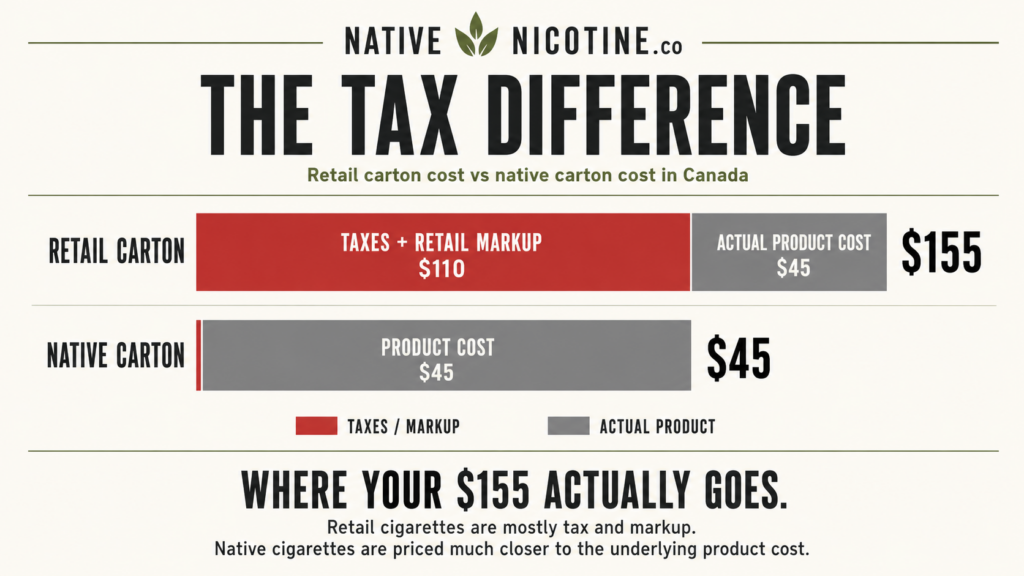
Tax is one of the largest reasons conventional retail cigarettes cost more, but the explanation needs to be precise.
Conventional Retail Taxes
Duty-paid retail cigarettes can include:
Federal excise duty
Provincial or territorial tobacco tax
GST, HST, or provincial sales tax
Annual inventory tax effects within the distribution system
Manufacturer, distributor, and retailer margins
The federal cigarette excise-duty rate effective April 1, 2026 is $0.97299 per five cigarettes or fraction of five. That equals approximately $38.92 on 200 cigarettes when the duty applies.
Ontario’s published tobacco-tax rate is 18.475 cents per cigarette, or $36.95 for 200 cigarettes. Together, those two layers alone total approximately $75.87 before sales tax and commercial costs.
Native Cigarette Tax Treatment
Section 87 of the Indian Act can provide tax relief for eligible registered First Nations individuals and qualifying personal property situated on a reserve. Provinces may also operate specific First Nations tobacco systems.
That does not mean every native cigarette is exempt for every buyer. Tax status can depend on:
Conventional retail pricing can include federal duty, provincial tobacco tax, sales tax, distribution, and retail overhead.
Live Native Nicotine Price Positioning
Current standard-product pricing commonly starts from:
Single packs: from $5.99 on participating standard products
Single cartons: from $49 on participating standard products
Ten-carton tiers: from $39 per carton on select standard products
These are “from” prices based on specific products and quantity variations. Confirm the live product page rather than assuming every brand uses the same tier.
Regular retail prices vary widely by province, brand, package size, city, and store. For current comparisons, read Cigarette Prices in Canada 2026.
Difference 3: Pack Sizes and Carton Counts
The old assumption that every cigarette pack contains 20 and every carton contains 200 is not reliable.
Native Nicotine Standard Products
Most standard Native Nicotine cartons contain:
20 cigarettes per pack
10 packs per carton
200 cigarettes per carton
Pop N’ Smoke Slim Products
Pop N’ Smoke specialty slim products contain:
10 cigarettes per pack
10 packs per carton
100 cigarettes per carton
Regular Retail Products
Conventional Canadian retail formats can include 20-cigarette and 25-cigarette packs. Carton configuration depends on the brand and package format.
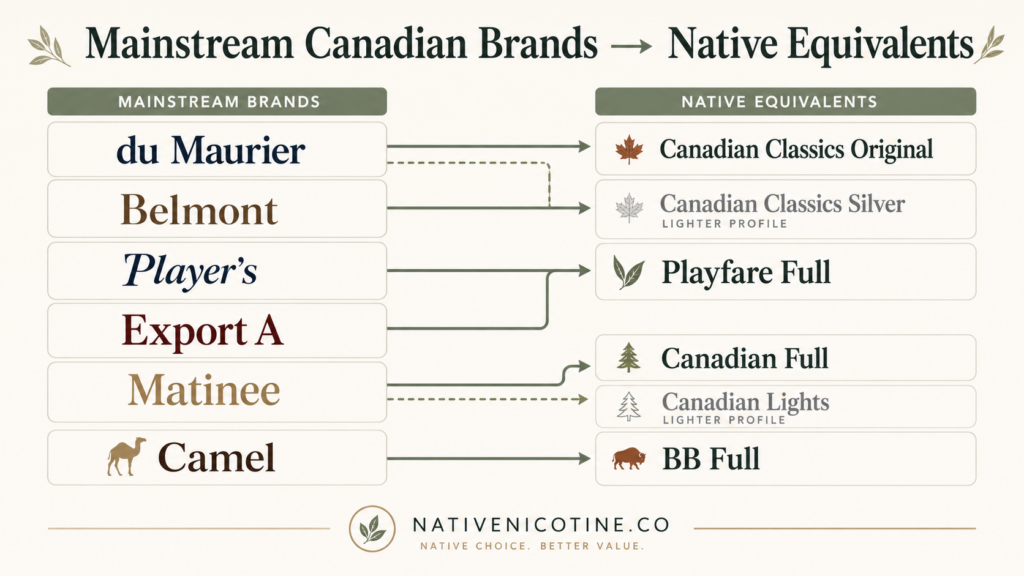
Native cigarettes are not exact replicas of du Maurier, Belmont, Player’s, Export A, Camel, or another mainstream brand. Each product can use a different tobacco blend, filter, paper, ventilation pattern, moisture level, and manufacturing specification.
What Influences the Smoking Experience?
Tobacco blend: affects body, aroma, sweetness, and finish.
Filter design: affects draw resistance and perceived smoothness.
Paper: affects burn rate and how the cigarette feels while smoking.
Ventilation: can change perceived intensity.
Moisture and freshness: influence harshness, burn, and consistency.
Storage: heat, air, and humidity can change the product after manufacturing.
Personal preference: familiarity strongly affects how a new cigarette is perceived.
Useful Profile Categories
Profile
General Description
Native Nicotine Category
Full flavour
More tobacco-forward body and a fuller perceived finish.
Do not treat “equivalent to” tables as scientific matches. A product can be a useful alternative for someone who prefers a similar general profile without tasting identical to a named brand.
Compare general profiles rather than expecting an exact copy of a mainstream brand.
Try Several Products Before Buying Multiple Cartons
A sample bundle reduces the commitment of trying unfamiliar products. It is usually more practical than choosing a large order based only on packaging colour or a comparison chart.
Difference 5: Packaging, Excise Stamps, and Health Warnings
Regular Retail Packaging
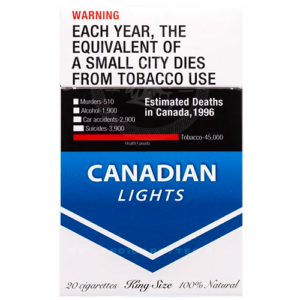
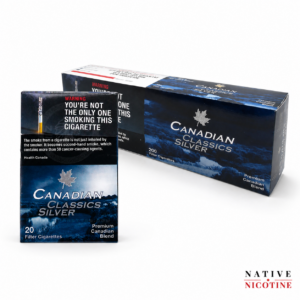
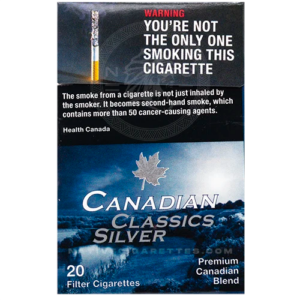
Health Canada’s Tobacco Products Regulations regarding plain and standardized appearance apply to tobacco products and packages intended for retail sale in Canada. Packages use standardized colours, typography, and layouts and must display required health and toxicity information.
Canada has also introduced health warnings directly on individual cigarettes. Packaging and labelling rules continue to evolve, so older packages and images may not represent current requirements.
Native Cigarette Packaging
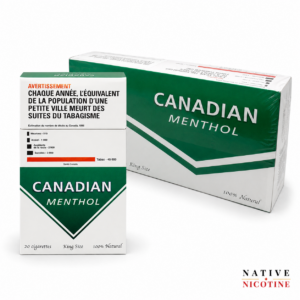
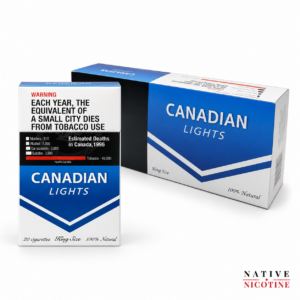
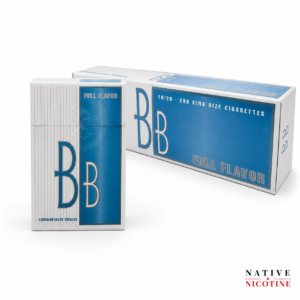
Some products marketed as native cigarettes appear in branded packages. That visual difference does not, by itself, establish:
Whether federal excise duty was paid
Whether the product is authorized for retail sale
Whether provincial markings are required
Whether the package complies with current federal rules
Whether the transaction is legal for a specific buyer
A colourful or branded pack is not proof of authenticity, quality, legality, or exemption.
Federal Excise Stamp
The Canada Revenue Agency explains that the federal tobacco excise stamp indicates that federal excise duty has been paid when required. Provinces may also use adapted stamps or province-specific markings.
The original version of this article stated that Indigenous tobacco businesses were exempt from Canada’s menthol ban. That is too broad.
In 2017, the federal government finalized a prohibition on menthol as an additive in cigarettes, blunt wraps, and most cigars sold on the Canadian market. The rule is product-based and should not be described as automatically inapplicable simply because a seller or manufacturer is Indigenous.
Menthol-labelled or flavoured products require careful product-specific compliance review. Online availability does not by itself prove that a product complies with federal and provincial law.
A product appearing online, using branded packaging, or being described as native does not establish its federal or provincial regulatory status.
Difference 7: How You Buy and Receive Them
Regular Retail Cigarettes
The main advantage of regular retail cigarettes is immediate availability. An eligible adult can visit a local retailer, complete any age check, pay, and leave with the product.
Online Native Cigarettes
A Native Nicotine order involves more steps:
Choose the product and quantity.
Add products to the cart.
Enter an accurate shipping address.
Submit checkout.
Follow the current Interac e-Transfer instructions.
Wait for payment receipt and matching.
Allow the order to be processed and packed.
Receive tracking after shipment.
Complete delivery, pickup, or proof-of-age requirements.
Native Nicotine orders ship in plain, unmarked outer packaging. The shipping parcel may still show normal carrier labels, tracking barcodes, destination information, and pickup or proof-of-age instructions.
Current General Delivery Estimates
Destination
Typical Estimate After Payment Confirmation and Processing
British Columbia, Alberta, Saskatchewan, and Manitoba
Difference 8: Quality, Consistency, and Authenticity
“Native” and “regular” are market categories, not universal quality grades. Products within either category can differ.
What Quality Can Mean
Consistent draw resistance
Predictable burn
Filter attachment and construction
Tobacco moisture
Freshness
Packaging condition
Batch consistency
Accurate quantity
Product traceability
How to Evaluate a Specific Native Product
Review real photographs rather than illustrations or recreated packs.
Read the exact pack and carton quantity.
Check the named manufacturer or brand information where available.
Review verified product feedback for repeated patterns.
Start with a pack or sampling bundle.
Inspect the delivered package and product condition.
Photograph any damaged, incorrect, or incomplete order before contacting support.
Do not claim a product is “the same quality as” a mainstream cigarette without reliable manufacturing and testing evidence. Similar size or taste does not prove identical materials or quality control.
Difference 9: Health Risk and the Meaning of “Light”
There is no safe cigarette category. Health Canada regulates tobacco because smoking causes addiction, disease, and premature death.
Are Native Cigarettes Safer?
No evidence should be inferred from the word “native,” lower price, branded packaging, or an Indigenous manufacturer. All combustible cigarettes expose the smoker and people nearby to harmful smoke.
Are Light Cigarettes Safer?
No. “Light,” “silver,” or smoother-tasting products can feel less harsh, but a smoother sensation does not establish lower health risk. Smoking behaviour can also change how much smoke and nicotine a person inhales.
Are Natural or Additive-Free Claims Safer?
No. Burning tobacco creates toxic chemicals even when a product uses natural-sounding language or claims fewer additives.
Health Canada cessation resources are available at Quit Smoking.
Native vs Regular Cigarette Cost Comparison
The correct calculation uses the actual local retail price and the live native product price.
Illustrative Regular Carton Price
Compared With a $49 Standard Native Carton
Price Difference
$120
$120 − $49
$71
$140
$140 − $49
$91
$160
$160 − $49
$111
$180
$180 − $49
$131
These are mathematical examples, not guaranteed savings. Shipping, carton count, quantity tier, product format, and local retail prices affect the real difference.
Compare Cost per Cigarette
Product price ÷ total number of cigarettes = cost per cigarette.
A $49 carton containing 200 cigarettes costs approximately 24.5 cents per cigarette before allocating shipping. A $49.90 carton containing 100 specialty slim cigarettes costs approximately 49.9 cents per cigarette. Both can be described as cartons, but they do not provide the same quantity.
How to Decide Which Product Fits Your Priorities
This is not a recommendation to begin or continue smoking. For adults who already smoke and are comparing products, the relevant priorities differ.
Priority
Regular Retail Cigarettes
Online Native Cigarettes
Immediate availability
Stronger fit
Requires ordering and delivery time.
Lower advertised carton price
Usually higher.
Often stronger fit, especially at bulk tiers.
Exact familiar mainstream brand
Stronger fit
Native brands are different products.
Trying several unfamiliar profiles
Requires buying separate retail packs.
Mix-and-match bundles available
Conventional duty-paid retail channel
Clearer conventional retail pathway
Requires product-specific legal and tax review.
Online ordering
Varies by retailer and province.
Core purchasing method
Planning ahead
Usually unnecessary.
Required because payment, processing, and shipping occur first.
First-Time Comparison Checklist
☐ Confirm the actual pack and carton count.
☐ Compare cost per cigarette, not only carton price.
☐ Choose a profile that resembles your preference without expecting an exact clone.
☐ Review real product photographs.
☐ Check verified reviews for consistency and condition.
☐ Read the live shipping and payment policies.
☐ Understand that “native” does not automatically prove tax exemption or legal status.
☐ Start with a lower-commitment quantity when the brand is unfamiliar.
☐ Remember that full, light-style, and menthol labels do not change the fundamental health risks of smoking.
Frequently Asked Questions About Native Cigarettes vs Regular Cigarettes
Are native cigarettes the same as regular cigarettes?
They are the same broad type of product because both are combustible tobacco cigarettes containing nicotine. They are not necessarily identical in blend, paper, filter, size, manufacturing, package markings, tax status, taste, or quality control.
Why are native cigarettes cheaper than regular cigarettes?
Lower prices can reflect different tax treatment in specific transactions, shorter distribution chains, lower storefront and brand overhead, direct online selling, and multi-carton discounts. The term “native” does not automatically mean tax-exempt for every buyer.
Do native cigarettes taste like du Maurier, Belmont, or Player’s?
Not exactly. Native brands use their own blends, filters, paper, and construction. A product may have a broadly similar full, light-style, or smooth profile without being an exact copy of a mainstream cigarette.
Are native cigarettes weaker?
Not automatically. Perceived strength varies by product and can be influenced by blend, filter, ventilation, draw, moisture, and smoking behaviour. Compare the specific brand and profile rather than the category name.
Are native cigarettes lower quality?
Price and category do not establish quality. Evaluate the specific manufacturer, packaging, construction, freshness, verified reviews, batch consistency, and delivered condition.
Are native cigarettes tax-free for everyone?
No. Section 87 tax relief applies in defined circumstances involving eligible registered First Nations individuals and qualifying property situated on a reserve. Tax treatment depends on the specific buyer and transaction.
Are native cigarettes legal for non-Indigenous customers?
The answer depends on the product, excise and provincial markings, sale, possession, delivery location, and provincial law. A broad category label cannot provide a universal legal answer.
Do all native cigarette cartons contain 200 cigarettes?
No. Most standard Native Nicotine cartons contain 200 cigarettes, but Pop N’ Smoke slim cartons contain 100. Always check cigarettes per pack and packs per carton.
Do native cigarettes follow plain-packaging rules?
Federal plain and standardized appearance regulations apply to tobacco products and packages intended for retail sale in Canada. A branded package does not by itself establish whether a specific product complies with current requirements.
Are menthol native cigarettes exempt from Canada’s menthol ban?
Do not assume so. The federal prohibition addresses menthol as an additive in cigarettes sold on the Canadian market. Indigenous ownership or native branding does not automatically establish an exemption.
Are light native cigarettes safer than full flavour cigarettes?
No. Light-style products may feel smoother, but smoother taste does not mean safer. All combustible cigarettes carry serious health risks.
What is the best way to try native cigarettes?
For an adult who already smokes and is comparing unfamiliar products, a single pack or mix-and-match pack bundle has less commitment than buying several cartons. Review live quantities, pricing, and product information first.
The Bottom Line
Native cigarettes and regular cigarettes are both combustible tobacco products, but they should not be described as automatically identical. They can differ in manufacturer, distribution, taxes, markings, price, pack count, blend, filter, taste, consistency, and buying process.
Regular retail cigarettes offer immediate local availability and a conventional duty-paid retail channel. Native cigarettes often offer lower advertised prices, more direct online purchasing, and different brands and quantity tiers. Those advantages do not create a blanket tax exemption, legal guarantee, quality guarantee, or health benefit.
The best comparison uses the specific product: read the quantity, calculate cost per cigarette, review the profile and manufacturer, inspect real photographs, check verified reviews, and start with a lower-commitment order when the brand is unfamiliar.
Compare native cigarette products
Review packs, cartons, profiles, and bundles.
Check real product photographs, live pricing, exact quantities, customer ratings, shipping terms, and available variations before ordering.